The Ultimate Comparison: Traditional Japanese Soba vs. Okinawa Soba
When exploring the rich world of Japanese cuisine, you will likely encounter two beloved noodle dishes sharing a similar name: “Japanese Soba” and “Okinawa Soba.”
While they both feature the word “soba,” they are actually completely different dishes in terms of appearance, flavor profile, ingredients, and historical origins. If you order Okinawa Soba expecting the thin, greyish buckwheat noodles commonly found in Tokyo or Kyoto, you are in for a massive surprise!
Let’s dive deep into what sets these two iconic regional noodles apart.
1.The Ultimate Difference: Noodle Ingredients
The single most defining difference between the two lies in the grain used to make the noodles themselves.
Traditional Japanese Soba: The Elegance of Buckwheat
Standard Japanese soba is made primarily from buckwheat flour (soba-ko), derived from the seeds of the buckwheat plant. Depending on the style, it is served either as Juwari Soba (100% buckwheat) or Nihachi Soba (an 80:20 ratio of buckwheat to wheat flour). Buckwheat gives these noodles their signature earthy grey-brown color, a delicate aroma, and a smooth, elegant texture that pairs beautifully with refined dipping sauces.
Okinawa Soba: 100% Wheat Flour Noodles
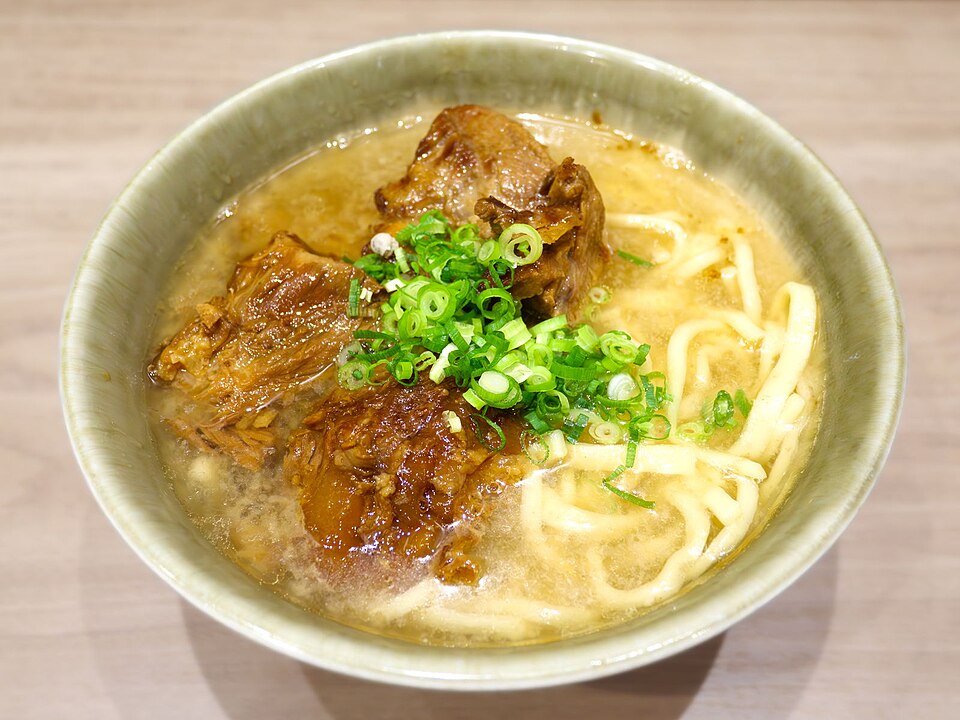
In contrast, Okinawa soba contains absolutely zero buckwheat. Instead, it is made entirely from 100% wheat flour, combined with water, salt, and kansui (an alkaline mineral water) or traditional wood ash liquid. This production method makes Okinawa soba technically closer to ramen or thick udon noodles. The result is a yellowish, thick, chewy noodle with an incredibly satisfying, hearty bite.
2.Soup Base and Toppings Comparison
The broth and toppings reflect the distinct regional food cultures and historical climates of mainland Japan versus the subtropical islands of Okinawa.
| Feature | Japanese Soba (Hot Style) | Okinawa Soba |
| Soup Base | Dashi made from bonito flakes (katsuobushi), kombu kelp, and shiitake mushrooms. | A rich yet clear hybrid broth blending pork bone (tonkotsu) broth and bonito dashi. |
| Seasoning | Soy sauce (kaeshi), mirin (sweet rice wine), and a touch of sugar for a deep umami flavor. | Salt and light soy sauce, creating a beautifully clear, savory broth. |
| Toppings | Tempura, green onions, aburaage (fried tofu pouches), or kamaboko (fish cake). | Sanmaiku (simmered pork belly), Soki (tender bone-in pork ribs), pickled red ginger, and Okinawan fish cakes. |
| Condiments | Shichimi (seven-spice powder) or wasabi (primarily for cold dipping noodles). | Koregusu (chili peppers soaked in local Awamori liquor) and Shichimi. |
💡 What is Koregusu?
Koregusu is the quintessential table condiment in Okinawa. It features fiery island chili peppers steeped in Awamori, Okinawa’s potent distilled liquor. Just a few drops add a sharp heat and an aromatic kick that cuts through the richness of the pork broth. Use it sparingly, as it packs a real punch!
3. The History: Why Are They Both Called “Soba”?
If Okinawa soba doesn’t contain any buckwheat, why is it legally allowed to be called “soba”? The answer lies in a historic culinary battle to protect local heritage.
In Okinawa, locals had been calling their beloved wheat-noodle dish “soba” since the Meiji period. However, in 1976, the Fair Trade Commission of Japan issued a strict regulation stating that “any noodle labeled as ‘soba’ must contain at least 30% buckwheat flour.” Under this rule, Okinawa’s signature dish was suddenly deemed illegal to be sold under its own name.
Fearing the loss of their culinary identity, the people of Okinawa fought back, launching a passionate campaign to defend their food culture. Their efforts paid off: on October 17, 1978, the government granted an official exception, legally recognizing “Okinawa Soba” as a unique regional designation. To this day, October 17th is celebrated across the islands as “Okinawa Soba Day.“
Summary: Which Style Fits Your Cravings?
To put it simply, here is how you can choose between the two:
- Choose Japanese Soba if: You want a light, elegant meal focused on the natural, earthy aroma of buckwheat, accompanied by a clean, umami-rich soy dashi.
- Choose Okinawa Soba if: You are craving a hearty, comforting bowl of chewy noodles topped with melt-in-your-mouth pork belly, served in a deeply savory pork-and-fish broth.
Both dishes are brilliant reflections of their respective regions’ history, climate, and geography. Next time you have the chance to try either, you can savor your bowl with a true appreciation for the unique craftsmanship behind it!